


W. Britain
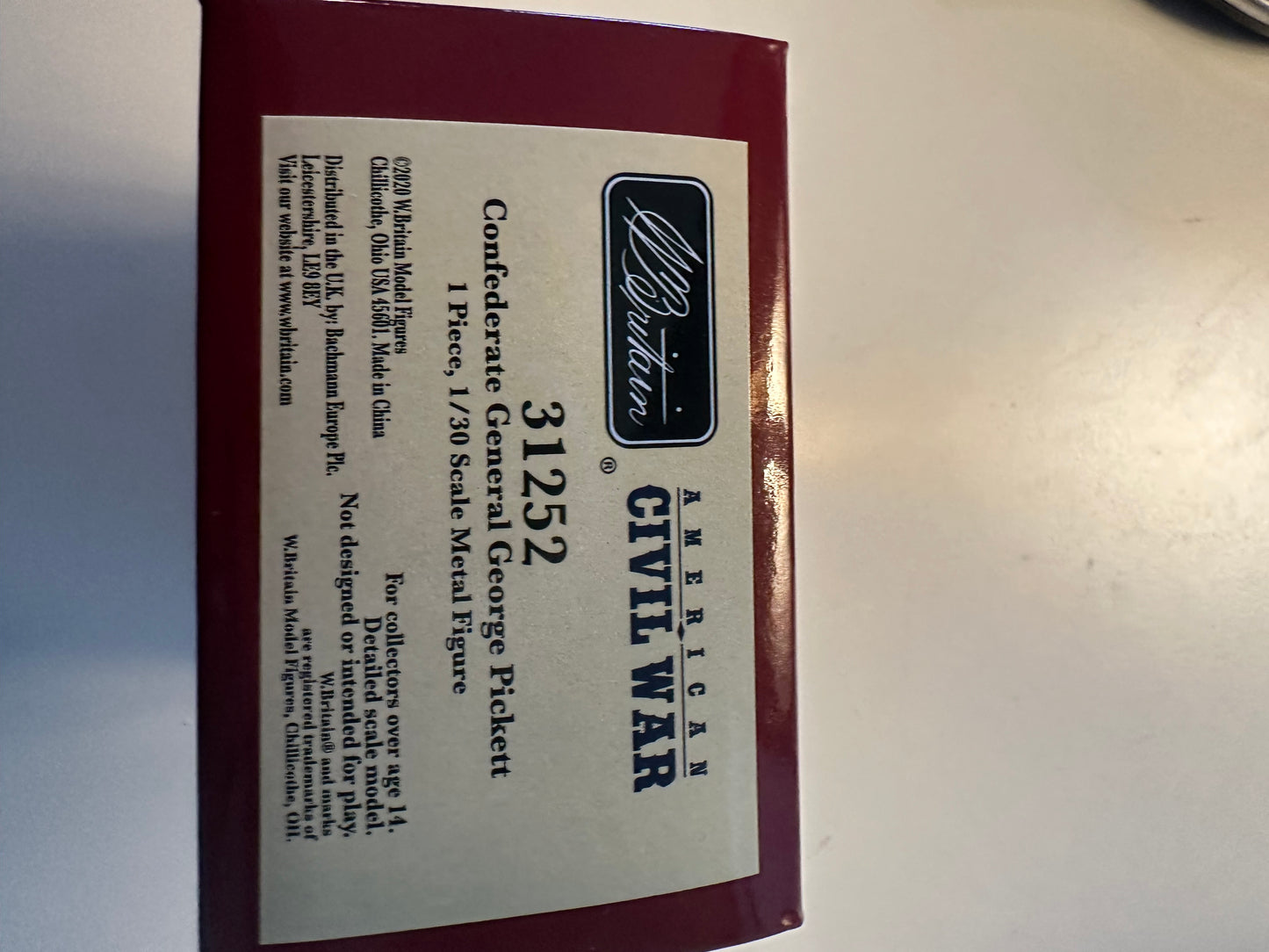
Major General George E. Pickett
Major General George E. Pickett
Couldn't load pickup availability
The infantry assault that bears George Pickett's name was not just his division. On the afternoon of July 3, 1863, at the climax of the Battle of Gettysburg, Robert E. Lee committed three divisions to a single attack across three-quarters of a mile of open ground against the Union center on Cemetery Ridge. Pickett's fresh division of Virginians was on the right. Brig. Gen. James Johnston Pettigrew's division — the same North Carolinians, Mississippians, and Alabamians that had broken the Iron Brigade on Day 1 — was on the left. Brig. Gen. Isaac Trimble's two brigades were in support. Together they were 12,500 men. They attacked into massed Union artillery firing canister at point-blank range and into rifle volleys from troops in stone-wall positions. The assault lasted less than an hour. Approximately 6,000 Confederates were killed, wounded, or captured — close to fifty percent. Pickett's own division lost over sixty percent and effectively ceased to exist as a combat unit: of the fifteen regimental commanders he had taken into the assault, fourteen were dead, wounded, or captured by the time the survivors reached Confederate lines again. The assault is called "Pickett's Charge" rather than "Longstreet's Assault" or "the July 3rd Attack" partly because Pickett's division was the freshest and the most visible from the Union lines, partly because the heroic Virginia infantry suited the legend Confederate veterans wanted to remember, and partly because of the bitterness Pickett himself carried for the rest of his short life. Asked years later about Lee, Pickett reportedly answered: "That old man had my division massacred at Gettysburg." He died in 1875, age fifty.
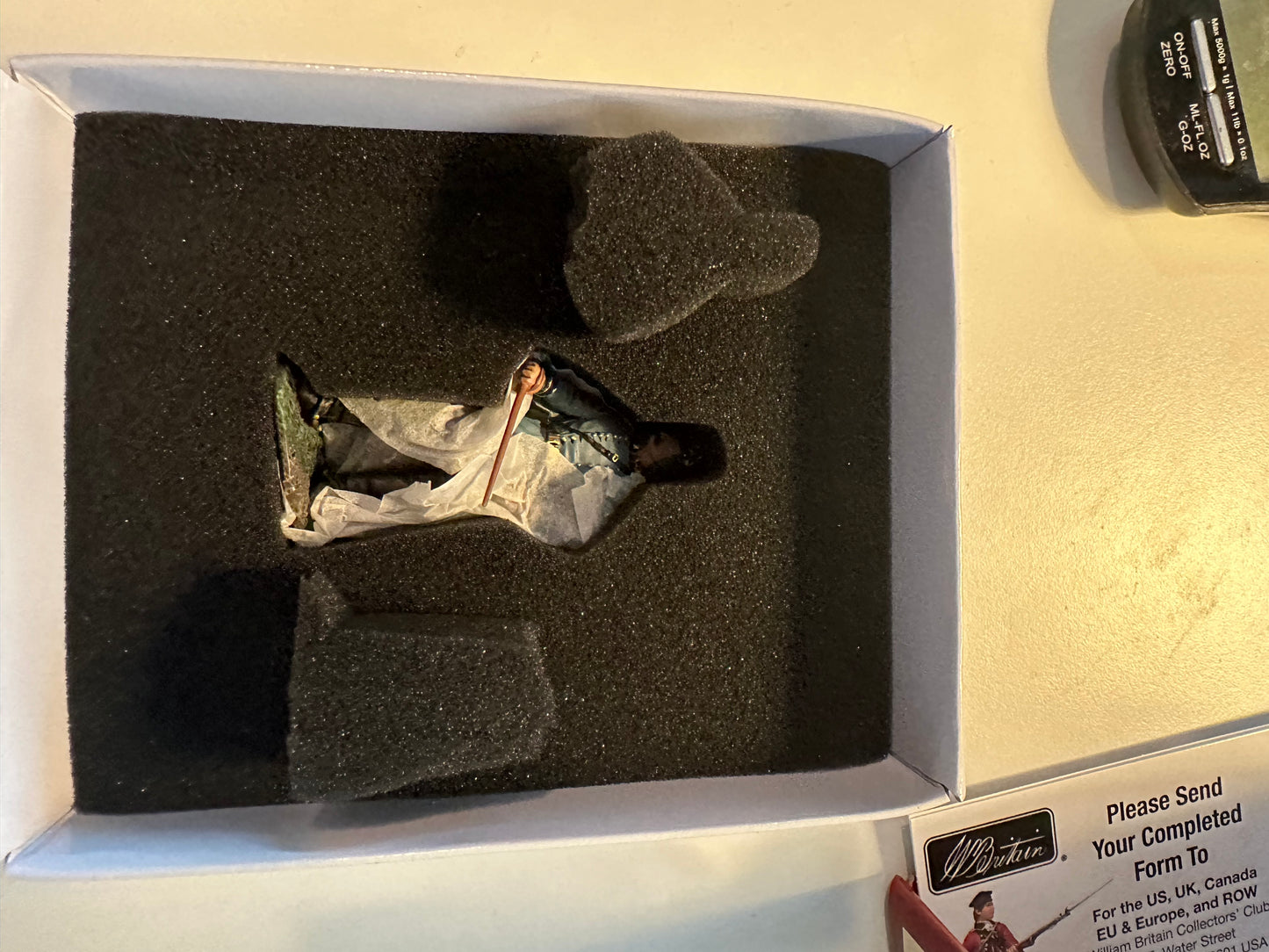
This W. Britain figure depicts Pickett in the dress and grooming that made him a notable figure in the Army of Northern Virginia even before Gettysburg. The light gray-blue major general's frock coat with the gold-buttoned cuffs and collar bars; the kepi rather than the slouch hat most general officers preferred; the riding crop carried in his right hand. The long dark hair was worn in oiled and perfumed ringlets to his shoulders — even by contemporary Confederate standards Pickett's appearance was conspicuous, and his fellow officers commented on it. He had finished last in his West Point class of 1846 (fifty-ninth of fifty-nine) — the same class that included Stonewall Jackson and George McClellan, both of whom finished much higher and would face Pickett in the war that followed. He won distinction in the Mexican-American War, planting the United States flag on the citadel at Chapultepec ahead of older officers. As a Confederate division commander he was steady but unspectacular until July 3, 1863, after which his name became forever attached to the most famous infantry assault in American military history. Pair this figure with Lt. Gen. James Longstreet, the corps commander who argued against the Day 3 assault and finally gave the order only when Lee insisted; with Maj. Gen. Winfield Scott Hancock, the Union II Corps commander whose line the charge broke against; or with General Robert E. Lee, the commanding general whose order Pickett never publicly forgave him for.
Scale: 1/30 (60mm). Matte-painted metal. W. Britain model 31252. From the American Civil War range. Single foot figure, supplied painted and ready for display.
Share
Materials
Materials
Metal
Dimensions
Dimensions
54mm
Care information
Care information
These are not play toys. They are collectables. Recommended for 14 yrs old and older.


Continue Shopping
See more of the Breagans' collection of manufacturers from all around the world
Subscribe to our emails
Subscribe to our mailing list for insider news, product launches, and more.