


W. Britain
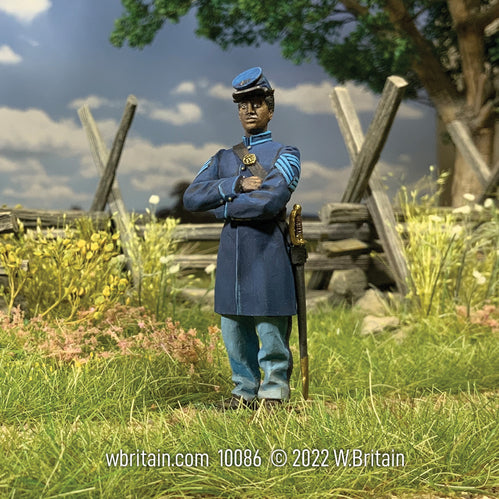
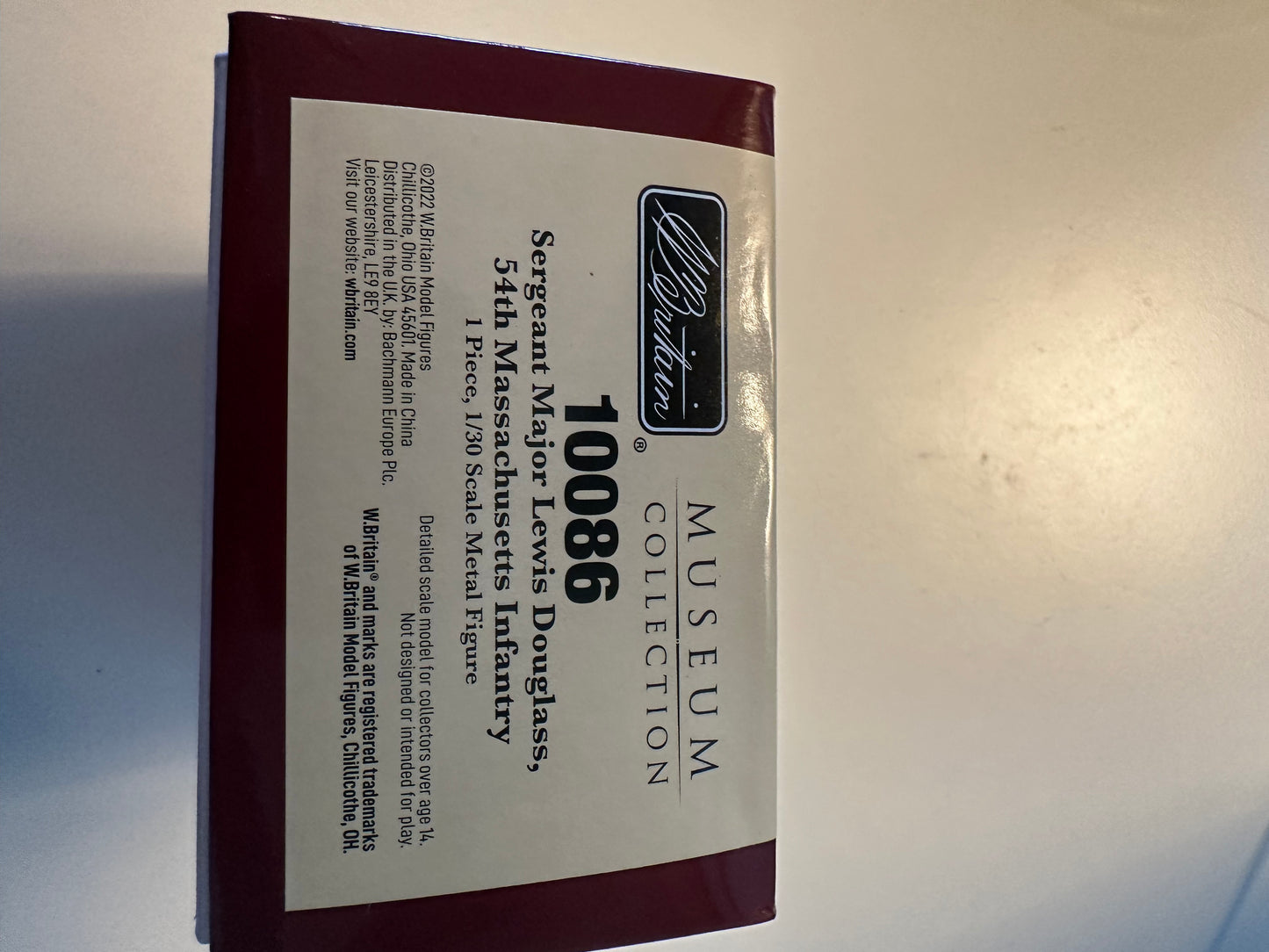
Sergeant Major Lewis Douglass, 54th Massachusetts
Sergeant Major Lewis Douglass, 54th Massachusetts
Couldn't load pickup availability
Lewis Henry Douglass was the eldest son of Frederick Douglass, the most prominent Black abolitionist in America. He had grown up in his father's newspaper office, apprenticed as a typesetter for the North Star, and was twenty-two years old when the 54th Massachusetts Volunteer Infantry began recruiting in February 1863. His father had been one of the principal speakers at the rallies that filled its ranks. Frederick Douglass personally enlisted his own sons — Lewis and Charles — and challenged the country to see whether men of African descent would fight. Lewis enlisted on March 25, 1863. He rose quickly. By the time the regiment landed on the Sea Islands of South Carolina in late May, he was Sergeant Major — the highest non-commissioned officer rank in the Union Army and, in 1863, the highest rank an African American could hold in any branch of the service. Five weeks later, on the evening of July 18, the 54th Massachusetts led the assault on Battery Wagner. Lewis Douglass was wounded carrying the regimental staff through the artillery fire across the open sand toward the parapet. He survived the wound. Two days afterward he wrote his fiancée Helen Amelia Loguen a letter that has become one of the most-quoted private documents of the war: "This regiment has established its reputation as a fighting regiment. Not a man flinched, though it was a trying time. We would have taken Fort Wagner but the regiment which was to have supported us did not come up. Men fell all around me." He fought afterward at James Island and Olustee, married Helen after the war, served as United States Marshal for the District of Columbia, and lived until 1908.
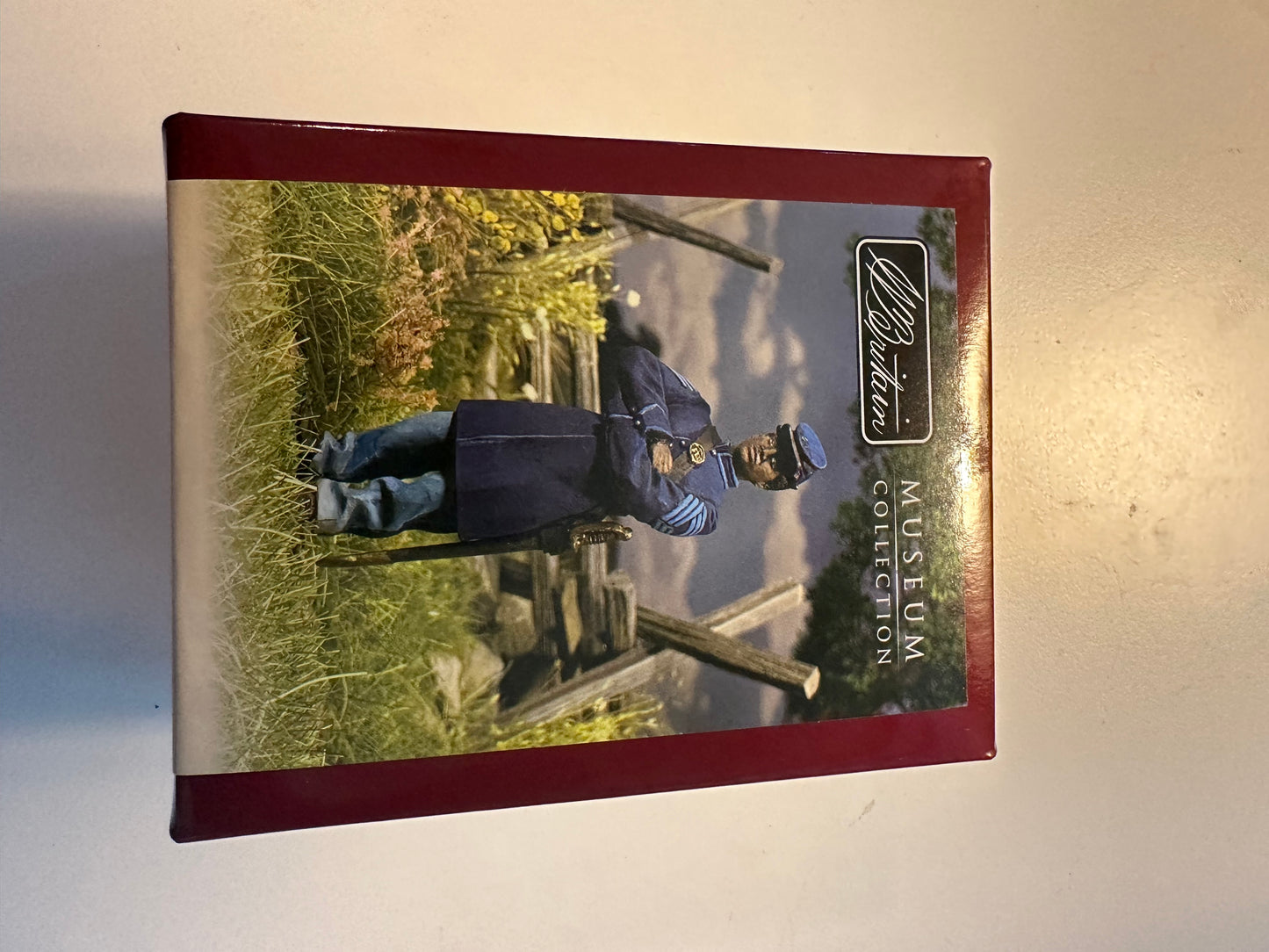
This W. Britain figure depicts Sgt. Major Lewis Douglass in the dress uniform of the 54th Massachusetts: the federal blue infantry frock coat with the two rows of buttons, the sergeant major's chevrons on both sleeves (three stripes down, three arcs up, with the diamond of a battalion sergeant major between them), the light blue regulation trousers, the high black field boots, and the forage cap with the regimental number "54" on the crown. The cavalry-pattern saber at his left hip and the U.S.-pattern belt with the cast officer's buckle mark his senior NCO position — sergeant majors were issued sabers as the badge of regimental authority. The crossed-arms pose is the dignified standing-portrait stance contemporary photographers used for senior enlisted men. He holds a U.S. emblem at his chest. Pair this figure with Frederick Douglass, his father, who recruited the regiment he served in; with Colonel Robert Gould Shaw, the regimental commander killed at the parapet of Fort Wagner in the same assault that wounded Douglass; or with Sgt. William Carney, the regimental flag bearer who carried the colors back from the same assault and became the first Black soldier to earn the Medal of Honor.
Scale: 1/30 (60mm). Matte-painted metal. W. Britain model 10086. From the American Civil War range. Single foot figure, supplied painted and ready for display.
Share
Materials
Materials
Metal
Dimensions
Dimensions
54mm
Care information
Care information
These are not play toys. They are collectables. Recommended for 14 yrs old and older.


Continue Shopping
See more of the Breagans' collection of manufacturers from all around the world
Subscribe to our emails
Subscribe to our mailing list for insider news, product launches, and more.