


W. Britain
Frederick Douglass
Frederick Douglass
Couldn't load pickup availability
Frederick Douglass was the most important Black political figure of the nineteenth century, and during the Civil War he was the most important non-elected political figure of any color in the United States. He had escaped from slavery in Maryland in September 1838, disguised as a sailor, traveling on a free Black seaman's protection paper borrowed from a friend. He had taught himself to read in secret as a child. By 1841 he was lecturing for the Massachusetts Anti-Slavery Society. By 1845 he was the author of a bestselling autobiography that made him internationally famous. By 1847 he was publishing his own anti-slavery newspaper, the North Star, in Rochester, New York. Through the secession winter of 1860 and the first year of war, Douglass pushed Lincoln publicly and privately to do two things: free the enslaved, and arm them. On both points he eventually got what he asked for. Lincoln issued the Emancipation Proclamation in January 1863. The recruitment of Black soldiers into the United States Army began a few weeks later. Douglass became one of the principal recruiters for the 54th Massachusetts Volunteer Infantry, the first Northern Black regiment, and he put his own two sons into its ranks — Lewis as Sergeant Major, Charles as a private. He met with Lincoln three times at the White House: in August 1863 to protest unequal pay and treatment of Black troops, in August 1864 to discuss helping Southern slaves escape if Lincoln lost the November election, and at the second Inauguration reception in March 1865 — where Lincoln spotted him in the receiving line and called out across the room, "Here comes my friend Douglass." Lincoln was assassinated six weeks later. Douglass lived until 1895 and never stopped working.
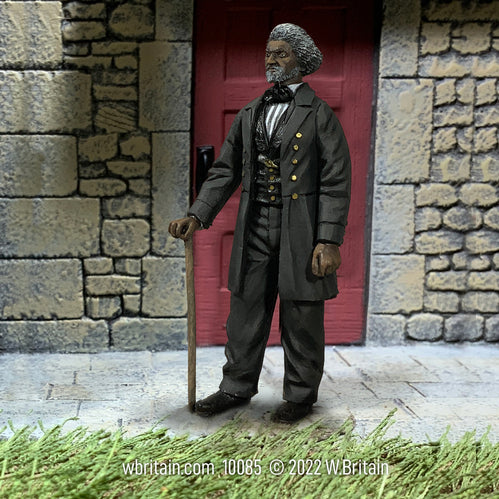
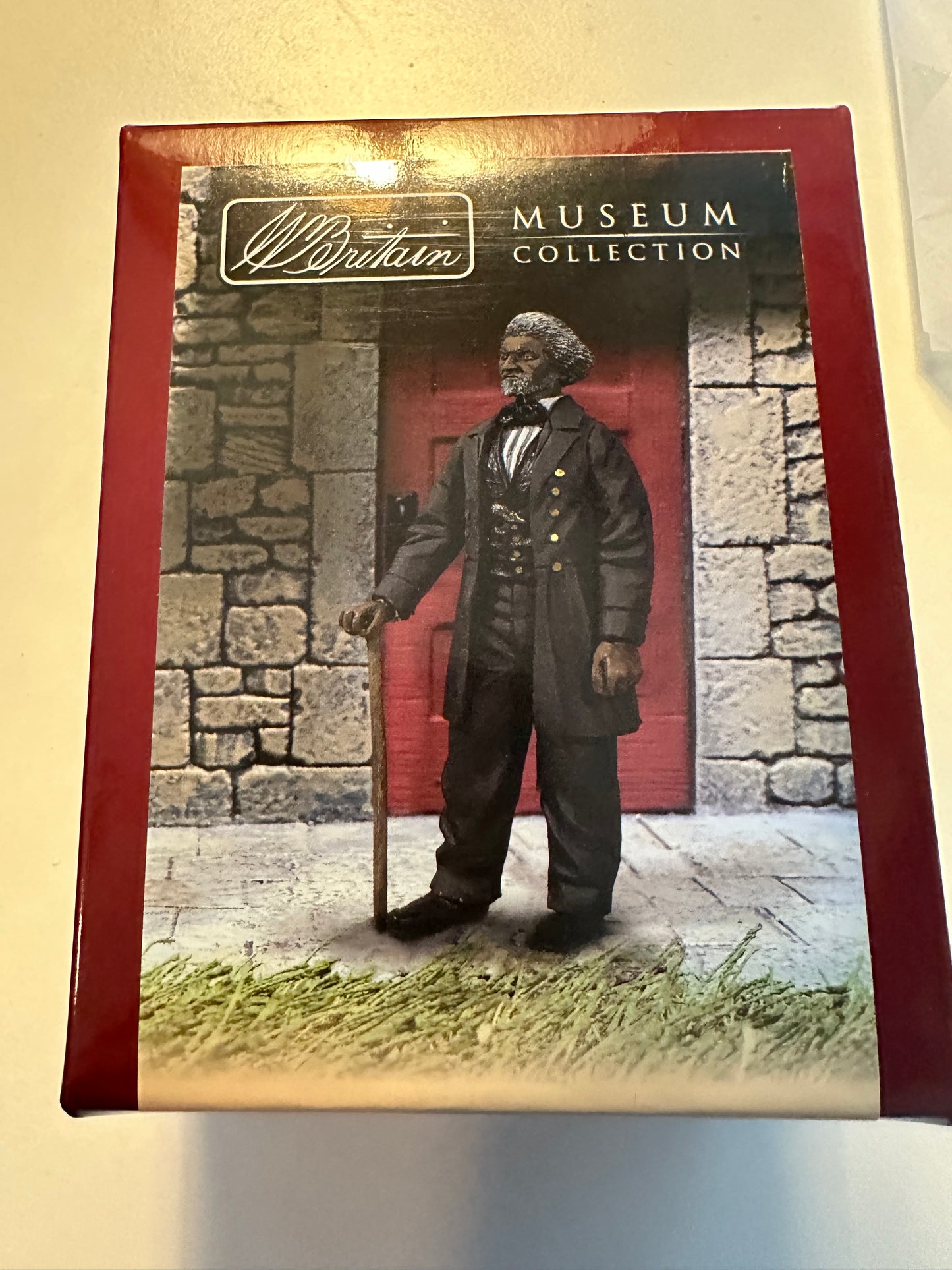
The W. Britain figure depicts Douglass in the civilian dress of his later years — black frock coat, dark vest with the watch chain, dark trousers, white shirt and black cravat, and the walking cane he carried after the 1860s. The iconic mane of gray-white hair is the visual signature; by his sixties Douglass had become one of the most recognizable men in America. He worked for the federal government in the postwar decades — United States Marshal for the District of Columbia from 1877 to 1881, Recorder of Deeds for Washington from 1881 to 1886, U.S. Minister to Haiti from 1889 to 1891 — but his core occupation never changed. He spoke, he wrote, he lectured, he organized. The figure is catalogued in the Civil War range because his political work was inseparable from the war's outcome, but it works equally well as a standalone civilian figure in any U.S. history display, from antebellum abolition through Reconstruction. Pair this figure with President Abraham Lincoln, whom Douglass pressured into the Emancipation Proclamation and met with three times at the White House; with Sgt. Major Lewis Douglass, his eldest son who served as senior NCO of the 54th Massachusetts and was wounded at Fort Wagner; or with Harriet Tubman, the Underground Railroad conductor and Civil War scout whose work Douglass publicly praised — the two of them the most prominent Black Americans of the wartime generation.
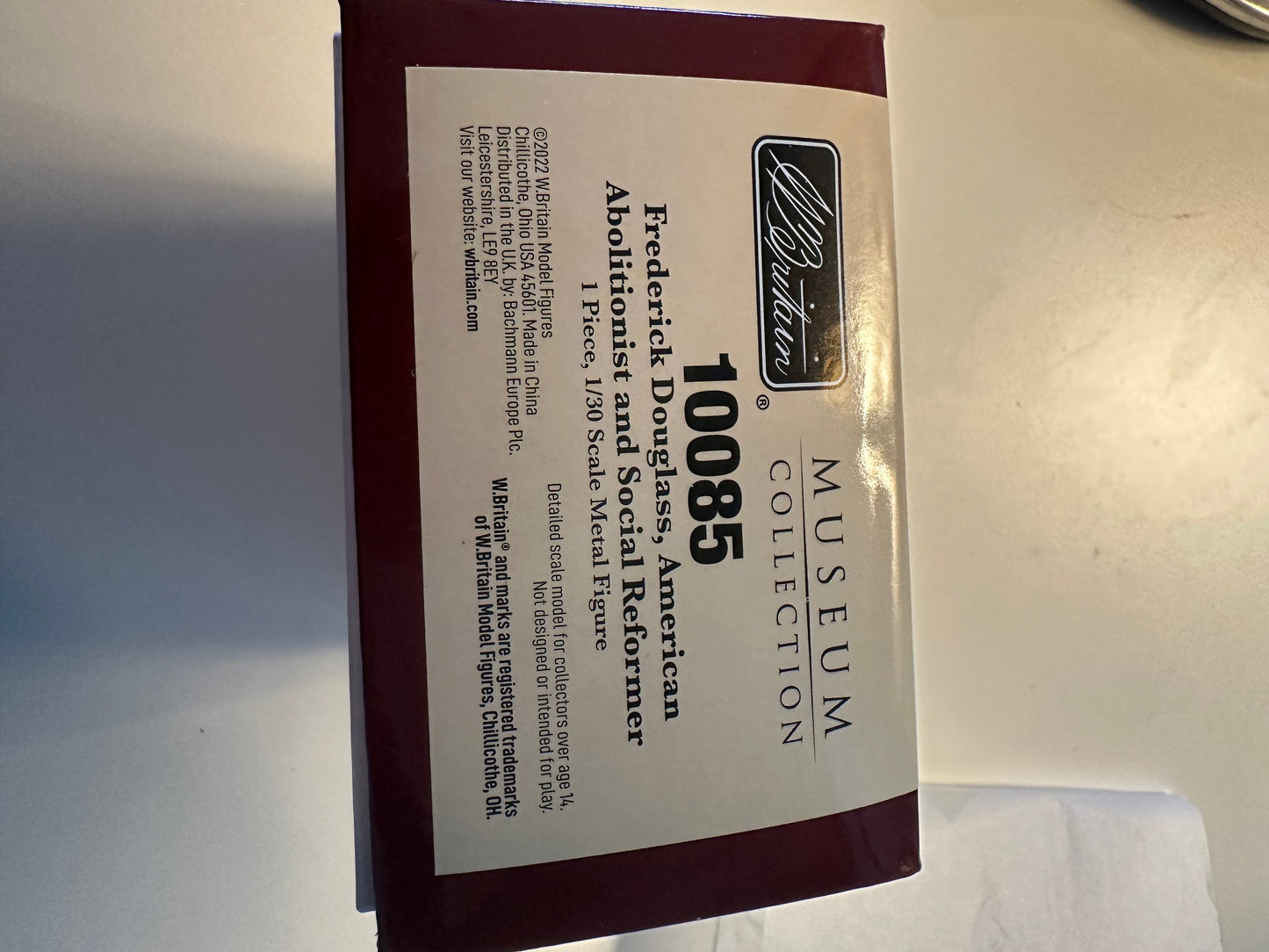
Scale: 1/30 (60mm). Matte-painted metal. W. Britain model 10085. From the American Civil War range. Single civilian foot figure, supplied painted and ready for display.
Share
Materials
Materials
Metal
Dimensions
Dimensions
54mm
Care information
Care information
These are not play toys. They are collectables. Recommended for 14 yrs old and older.


Continue Shopping
See more of the Breagans' collection of manufacturers from all around the world
Subscribe to our emails
Subscribe to our mailing list for insider news, product launches, and more.