


W. Britain
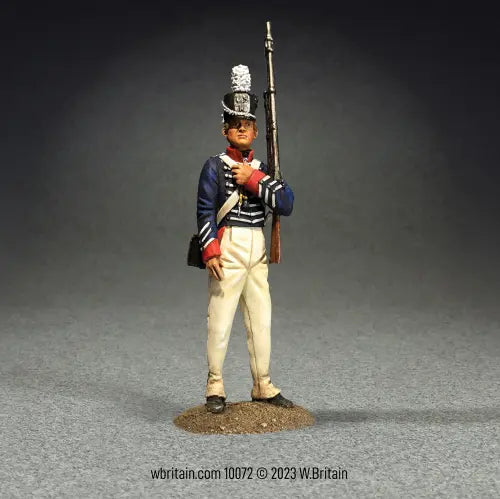
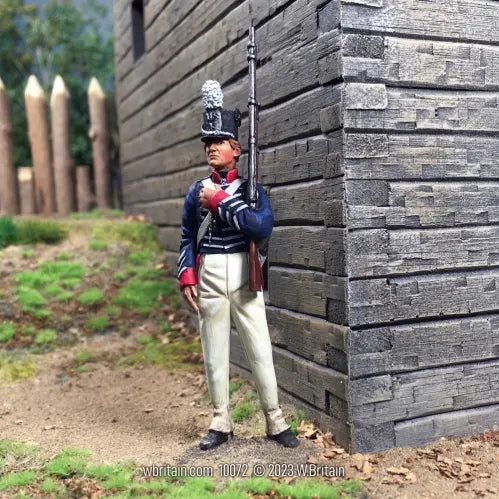
U.S. Infantryman, 1813–14
U.S. Infantryman, 1813–14
Couldn't load pickup availability
Work out what it cost a man to stand here. A private in the regular army was paid $5 to $8 a month, less than an unskilled laborer made, and the pay system did not work — by late 1814 soldiers were six to twelve months or more behind, in defiance of a law limiting arrears to two. So the army had to buy men rather than attract them. The enlistment bounty began at $31 and 160 acres of land and finished the war at $124 and 320 acres: the price of a recruit roughly quadrupled in two years, which is what a recruiting crisis looks like in the ledgers. Early volunteers signed for five years; later ones could sign for the duration. The regular army had been about 10,000 strong when war was declared, an act of 1812 authorized 36,700, and another raised twenty infantry regiments for a single year's service — numbers that existed on paper long before they existed in camp. What became of the men is written on their discharge certificates, which recorded service dates, terms, clothing issued and back pay owed; one soldier collected seventeen months of arrears on his way out the door. The same certificates list the reasons men were let go, and they are not stirring: amputations and bullet wounds, but also asthma, epilepsy, rheumatism, "incurrable siphilis," and "habitual intoxication." The land was the real wage, and it was paid in acres nobody had surveyed yet.
The figure is one of them turned out properly — national blue coatee with red facings and white worsted lace across the breast, white trousers, cartridge box, and the tall shako with its plume and front plate. The musket at his shoulder is the whole of his trade. The man who spent the spring of 1814 trying to turn thousands like him into something that could stand against British regulars is General Winfield Scott, and he did it with ten-hour drill days. Beside him in the line stood the U.S. Artilleryman, working guns that had to be placed where they could be seen to be aimed. And the professional army he was recruited to fight, which had been embarrassing the United States since the first summer of the war, was the one built by General Isaac Brock.
Model: 10072 / W. Britain / 1/30 scale / matte finish / 1 piece set
Share
Materials
Materials
Metal
Dimensions
Dimensions
54mm
Care information
Care information
These are not play toys. They are collectables. Recommended for 14 yrs old and older.

Continue Shopping
See more of the Breagans' collection of manufacturers from all around the world
Subscribe to our emails
Subscribe to our mailing list for insider news, product launches, and more.