


W. Britain
Abraham Lincoln
Abraham Lincoln
Couldn't load pickup availability
The Emancipation Proclamation was not a humanitarian gesture. Lincoln issued it on January 1, 1863, as an executive order under his Commander-in-Chief war powers, declaring all enslaved people in Confederate-held territory "thenceforward and forever free." Its mechanism was strictly military: it did not apply to the four border slave states still in the Union — Delaware, Maryland, Kentucky, and Missouri — and it did not abolish slavery as an institution, which would take the 13th Amendment ratified after Lincoln's death. What it did was three things, all strategic. It transferred ownership of the South's labor force away from the Confederacy. It made foreign recognition of the Confederacy by Britain or France — both of which had ended slavery in their own empires decades earlier — politically impossible. And it opened the door for Black soldiers in the Union Army; by the end of the war, roughly 180,000 men had served in the United States Colored Troops, nearly one in ten of every Union soldier under arms. Lincoln understood from the first that the Proclamation was the single act of his presidency his political enemies could not undo once it took effect. He spent the next twenty-six months making sure it stayed in force, and he was assassinated five days after Lee's surrender at Appomattox effectively secured it.
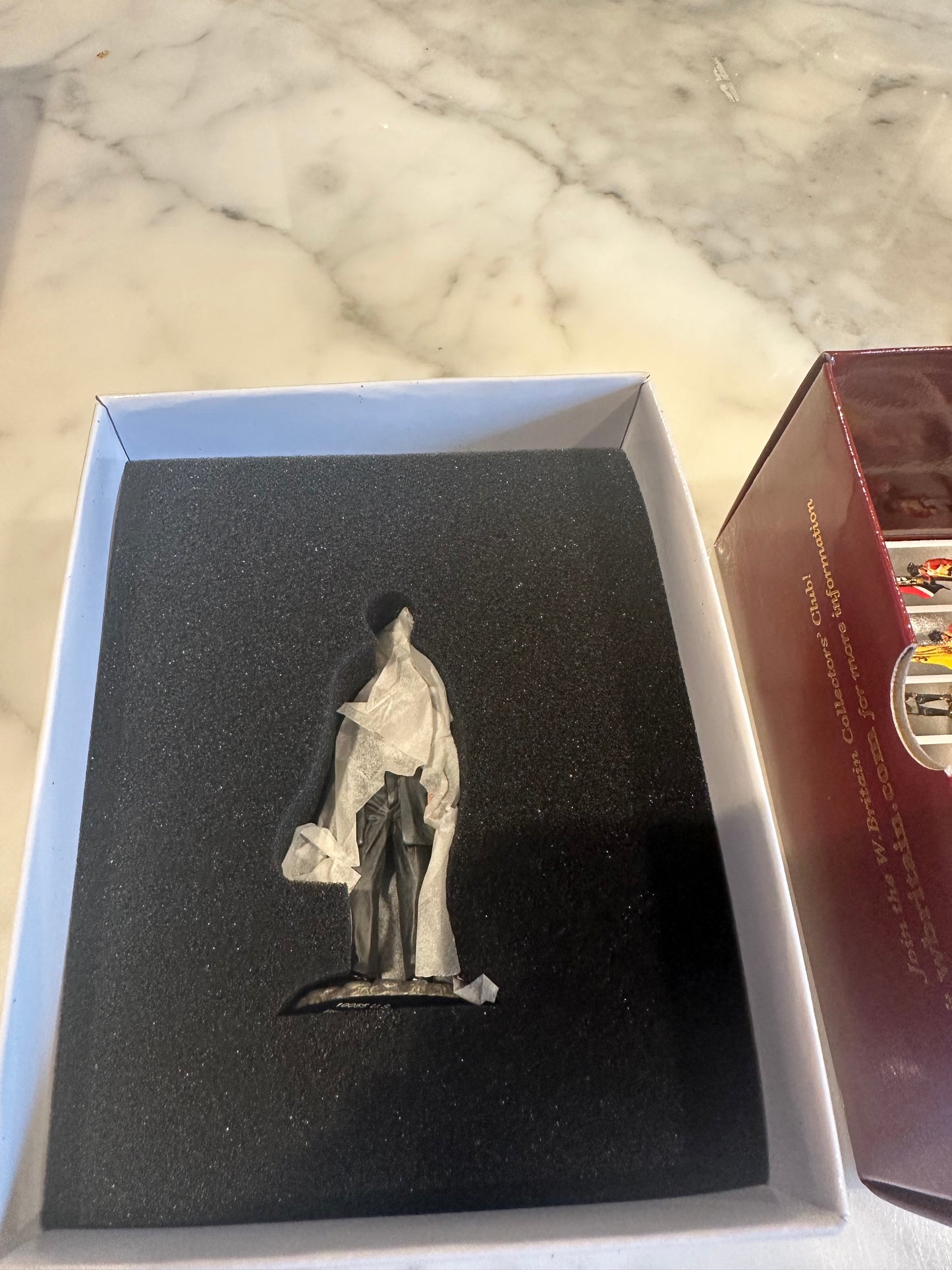
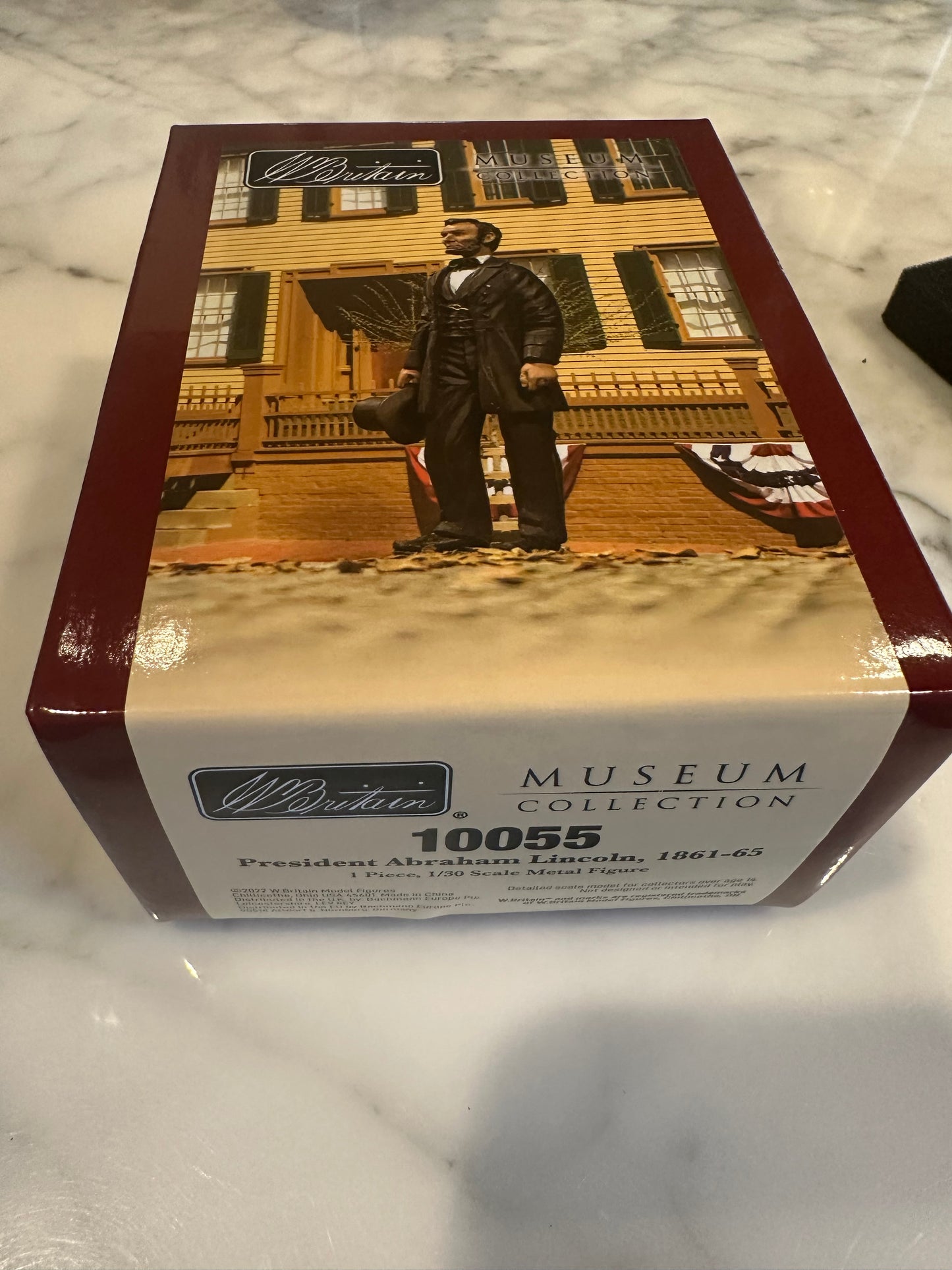
The W. Britain figure depicts Lincoln in the iconic image Mathew Brady's studio fixed in American memory: the long black frock coat, dark vest and tie, the beard he grew during the 1860 campaign at the suggestion of an eleven-year-old girl named Grace Bedell from Westfield, New York, and the tall stovepipe hat held down at his side. The pose is the public Lincoln — the speaker, the visitor, the President at a reception or a hospital ward or a battlefield review. The base is a paved street suggesting Washington or one of the eastern cities Lincoln traveled to during the war. The figure works as the named centerpiece of any Civil War display — Union, Confederate, or a combined catalog — and as the standalone anchor of a U.S. Presidents lineup or one of the named historical individuals in the W. Britain Museum Collection. Pair him with General Ulysses S. Grant, the commander Lincoln chose to lead all Union armies after every other general had failed him; with Frederick Douglass, the abolitionist who pressured Lincoln toward emancipation and met with him three times at the White House; or with Sgt. William Carney of the 54th Massachusetts, the first Black soldier awarded the Medal of Honor — for carrying the regimental flag off the parapet at Fort Wagner — and a soldier of the kind the Emancipation Proclamation made it possible to enlist.
Scale: 1/30 (60mm). Matte-painted metal. W. Britain model 10055. From the American Civil War range; also catalogued in the W. Britain Museum Collection. Single foot figure, supplied painted and ready for display.
Share
Materials
Materials
Metal
Dimensions
Dimensions
54mm
Care information
Care information
These are not play toys. They are collectables. Recommended for 14 yrs old and older.



Continue Shopping
See more of the Breagans' collection of manufacturers from all around the world
Subscribe to our emails
Subscribe to our mailing list for insider news, product launches, and more.